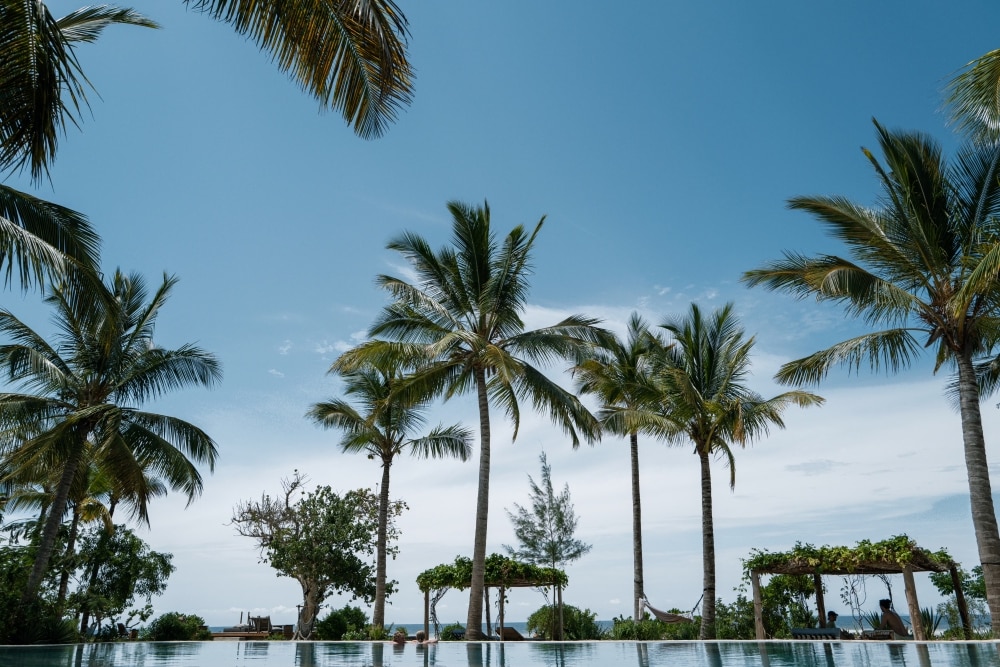
スラカルタとその周辺の見どころ
スラカルタ(中央ジャワ州)は、ショッピングセンターや教育的な体験が融合した、家族旅行やビジネス旅行に最適な場所です。スパトリートメントを満喫したり、さまざまなショッピングを楽しんだりすることができ、レジャーやリラックスにぴったりの目的地です。くつろぎたい方も、活気ある地元の文化を楽しみたい方も、スラカルタには誰もが楽しめる何かがあります。
ショッピング
スラカルタで活気あるショッピング体験をするなら、エンターテインメントと家族向けのにぎやかさで知られるソロ・パラゴン・ライフスタイル・モールとソロ・スクエアを訪れてみてください。地元の品物や都会の雰囲気を味わえるゲデ市場もお見逃しなく。車で行くなら、さらに多くの選択肢がある近隣の他のショッピングスポットも探索してみましょう。
レクリエーション
スラカルタから26マイル(約42km)離れた場所にあるラマヤナ・バレエは、ロマンチックなダンスパフォーマンスで訪問者を楽しませ、魅了する、魅惑的な文化体験を提供します。一方、同じく26マイル(約42km)離れた場所にあるムラピ・ゴルフコースは、ゴルフ愛好家のために屋外スポーツの雰囲気を提供し、リラックスやレクリエーションに最適です。
スポーツファンには、スラカルタから30マイル(約48km)に位置するマグウォハルジョ・スタジアムがおすすめです。さまざまなスポーツイベントが開催され、活気に満ちた雰囲気で、地元のスポーツ文化に浸るにはエキサイティングな場所です。
アドベンチャー
豊かな自然に囲まれたナカムラ・クリニックで、爽快なアウトドア体験をしてみましょう。スリリングな一日を過ごすなら、スラカルタから30マイル(約48km)離れた場所にある、エキサイティングな乗り物と家族向けの楽しさを提供する活気あるウォーターパーク、ジョグジャ・ベイへ。アドベンチャーに満ちた一日を過ごすのに最適です。
ナイトライフ
活気あるスラカルタのナイトライフを探索するには、夜の散策や地元の屋台を楽しめる賑やかなタマン・バレカンバン公園を訪れてみましょう。楽しいバーシーンを求めるなら、カクテルやライブミュージックが楽しめるザ・レジェンド・バー、またはリラックスした雰囲気で爽やかなドリンクが味わえるカフェ・タマンをチェックしてください。
*距離は直線距離で測定されています。実際の移動距離はルートによって異なる場合があります。
![At the museum no photos are allowed which is really unfortunate as it was well worth the visit and the guided tour is definitely not to be missed. In the museum there are even Batik made from the Dutch era which depicts stories like Little Red Riding Hood and Snow White!
I enjoyed the tour v much and at the end of the tour we were brought to this room where the artisan were working on hand drawn batik.
Below is an excerpt from Wikipedia for anyone interested in learning more about the process of batik making.
Firstly, a cloth is washed, soaked and beaten with a large mallet. Patterns are drawn with pencil and later redrawn using hot wax, usually made from a mixture of paraffin or bees wax, sometimes mixed with plant resins, which functions as a dye-resist. The wax can be applied with a variety of tools. A pen-like instrument called a canting (IPA: [tʃantiŋ], sometimes spelled with old Dutch orthography tjanting) is the most common. A canting is made from a small copper reservoir with a spout on a wooden handle. The reservoir holds the resist which flows through the spout, creating dots and lines as it moves. For larger patterns, a stiff brush may be used. Alternatively, a copper block stamp called a cap (IPA: [tʃap]; old spelling tjap) is used to cover large areas more efficiently.
After the cloth is dry, the resist is removed by scraping or boiling the cloth. The areas treated with resist keep their original color; when the resist is removed the contrast between the dyed and undyed areas forms the pattern. This process is repeated as many times as the number of colors desired.
The most traditional type of batik, called batik tulis (written batik), is drawn using only the canting. The cloth need to be drawn on both sides and dipped in a dye bath three to four times. The whole process may take up to a year; it yields considerably finer patterns than stamped batik.
Source: Wikipedia](https://images.trvl-media.com/place/6224808/26fd1460-c65a-4c1a-9444-7a893e883ac9.jpg?impolicy=fcrop&w=1200&h=500&q=medium)































![At the museum no photos are allowed which is really unfortunate as it was well worth the visit and the guided tour is definitely not to be missed. In the museum there are even Batik made from the Dutch era which depicts stories like Little Red Riding Hood and Snow White!
I enjoyed the tour v much and at the end of the tour we were brought to this room where the artisan were working on hand drawn batik.
Below is an excerpt from Wikipedia for anyone interested in learning more about the process of batik making.
Firstly, a cloth is washed, soaked and beaten with a large mallet. Patterns are drawn with pencil and later redrawn using hot wax, usually made from a mixture of paraffin or bees wax, sometimes mixed with plant resins, which functions as a dye-resist. The wax can be applied with a variety of tools. A pen-like instrument called a canting (IPA: [tʃantiŋ], sometimes spelled with old Dutch orthography tjanting) is the most common. A canting is made from a small copper reservoir with a spout on a wooden handle. The reservoir holds the resist which flows through the spout, creating dots and lines as it moves. For larger patterns, a stiff brush may be used. Alternatively, a copper block stamp called a cap (IPA: [tʃap]; old spelling tjap) is used to cover large areas more efficiently.
After the cloth is dry, the resist is removed by scraping or boiling the cloth. The areas treated with resist keep their original color; when the resist is removed the contrast between the dyed and undyed areas forms the pattern. This process is repeated as many times as the number of colors desired.
The most traditional type of batik, called batik tulis (written batik), is drawn using only the canting. The cloth need to be drawn on both sides and dipped in a dye bath three to four times. The whole process may take up to a year; it yields considerably finer patterns than stamped batik.
Source: Wikipedia](https://images.trvl-media.com/place/6224808/26fd1460-c65a-4c1a-9444-7a893e883ac9.jpg?impolicy=fcrop&w=300&h=400&p=1&q=high)






 月
月 気温
気温 降水
降水 雲量
雲量 観光客数
観光客数 料金
料金