ソロ シティ センター
旅行ガイド
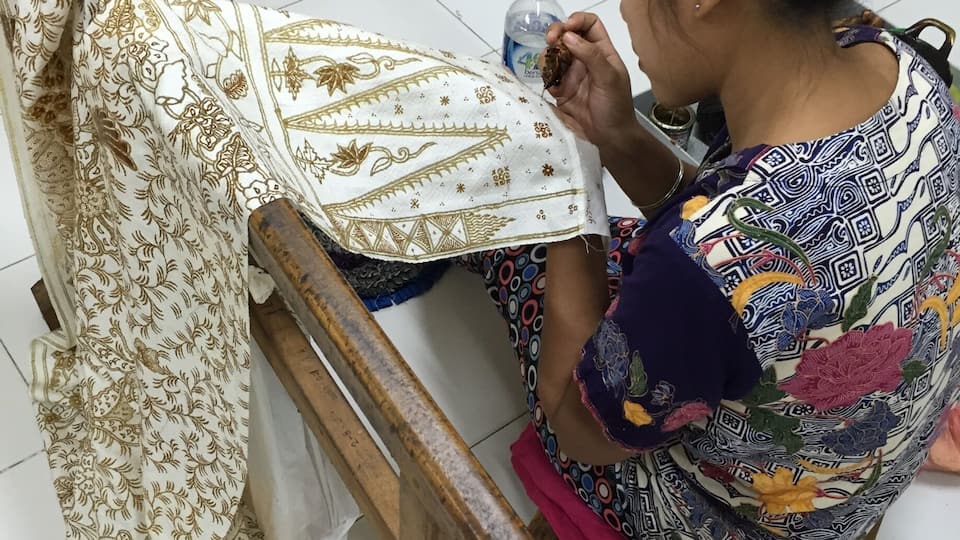
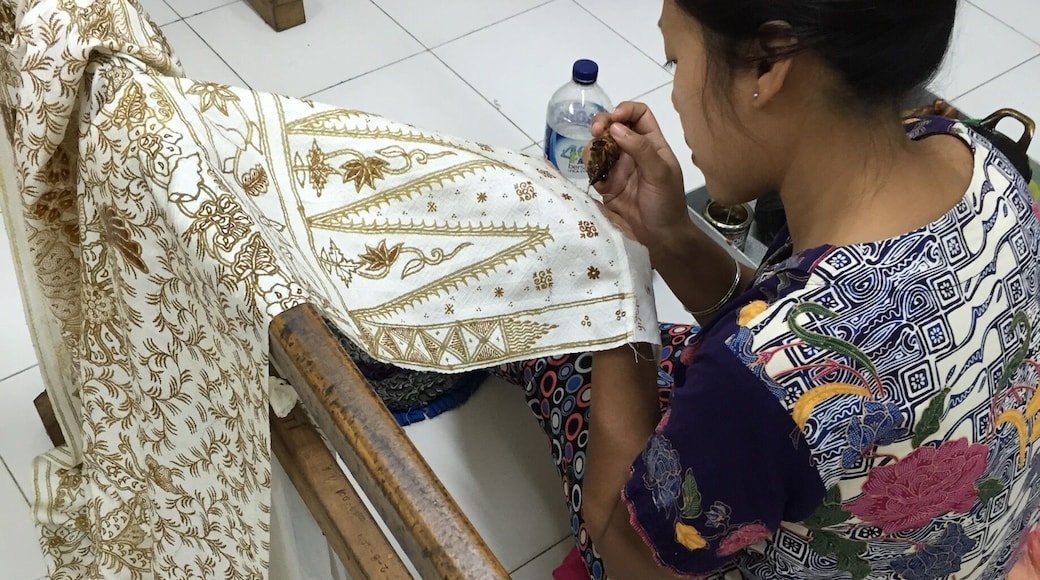
![At the museum no photos are allowed which is really unfortunate as it was well worth the visit and the guided tour is definitely not to be missed. In the museum there are even Batik made from the Dutch era which depicts stories like Little Red Riding Hood and Snow White!
I enjoyed the tour v much and at the end of the tour we were brought to this room where the artisan were working on hand drawn batik.
Below is an excerpt from Wikipedia for anyone interested in learning more about the process of batik making.
Firstly, a cloth is washed, soaked and beaten with a large mallet. Patterns are drawn with pencil and later redrawn using hot wax, usually made from a mixture of paraffin or bees wax, sometimes mixed with plant resins, which functions as a dye-resist. The wax can be applied with a variety of tools. A pen-like instrument called a canting (IPA: [tʃantiŋ], sometimes spelled with old Dutch orthography tjanting) is the most common. A canting is made from a small copper reservoir with a spout on a wooden handle. The reservoir holds the resist which flows through the spout, creating dots and lines as it moves. For larger patterns, a stiff brush may be used. Alternatively, a copper block stamp called a cap (IPA: [tʃap]; old spelling tjap) is used to cover large areas more efficiently.
After the cloth is dry, the resist is removed by scraping or boiling the cloth. The areas treated with resist keep their original color; when the resist is removed the contrast between the dyed and undyed areas forms the pattern. This process is repeated as many times as the number of colors desired.
The most traditional type of batik, called batik tulis (written batik), is drawn using only the canting. The cloth need to be drawn on both sides and dipped in a dye bath three to four times. The whole process may take up to a year; it yields considerably finer patterns than stamped batik.
Source: Wikipedia](https://images.trvl-media.com/place/6224808/26fd1460-c65a-4c1a-9444-7a893e883ac9.jpg?impolicy=fcrop&w=1040&h=580&q=mediumHigh)
![At the museum no photos are allowed which is really unfortunate as it was well worth the visit and the guided tour is definitely not to be missed. In the museum there are even Batik made from the Dutch era which depicts stories like Little Red Riding Hood and Snow White!
I enjoyed the tour v much and at the end of the tour we were brought to this room where the artisan were working on hand drawn batik.
Below is an excerpt from Wikipedia for anyone interested in learning more about the process of batik making.
Firstly, a cloth is washed, soaked and beaten with a large mallet. Patterns are drawn with pencil and later redrawn using hot wax, usually made from a mixture of paraffin or bees wax, sometimes mixed with plant resins, which functions as a dye-resist. The wax can be applied with a variety of tools. A pen-like instrument called a canting (IPA: [tʃantiŋ], sometimes spelled with old Dutch orthography tjanting) is the most common. A canting is made from a small copper reservoir with a spout on a wooden handle. The reservoir holds the resist which flows through the spout, creating dots and lines as it moves. For larger patterns, a stiff brush may be used. Alternatively, a copper block stamp called a cap (IPA: [tʃap]; old spelling tjap) is used to cover large areas more efficiently.
After the cloth is dry, the resist is removed by scraping or boiling the cloth. The areas treated with resist keep their original color; when the resist is removed the contrast between the dyed and undyed areas forms the pattern. This process is repeated as many times as the number of colors desired.
The most traditional type of batik, called batik tulis (written batik), is drawn using only the canting. The cloth need to be drawn on both sides and dipped in a dye bath three to four times. The whole process may take up to a year; it yields considerably finer patterns than stamped batik.
Source: Wikipedia](https://images.trvl-media.com/place/6224808/26fd1460-c65a-4c1a-9444-7a893e883ac9.jpg?impolicy=fcrop&w=1040&h=580&q=mediumHigh)
人気の観光スポット
ソロ パラゴン ライフスタイル モール
4/5(口コミ 2 件)
スラカルタ旅行中には、ソロ パラゴン ライフスタイル モールに繰り出して旅の記念になる品を見つけられるでしょう。 またこの文化的なエリアでは、ミュージアムやミュージカル公演が必見です。
マンクヌガラン宮殿
マンクヌガラン宮殿は、スラカルタで見逃せない名所のほんの一例です。旅行中には、その他の観光スポットもめぐりましょう。またこの文化的なエリアでは、ミュージアムやミュージカル公演が必見です。
ラディア・プスタカ博物館
スラカルタ訪問中には、ラディア・プスタカ博物館のさまざまな展示品を鑑賞しながら、充実した午後を 過ごすことができます。 またこの文化的なエリアでは、時間を取ってショップをめぐりましょう。
スブラス マレット大学
スラカルタ旅行中には、スブラス マレット大学のキャンパスツアーに参加して、活気あふれる雰囲気を味わってください。 またこの文化的なエリアでは、ミュージカル公演が必見です。
現地ツアー
ソロ シティ センター 旅行で人気上昇中のホテル

ノボテル ソロ
Jalan Slamet Riyadi 272 Surakarta Central Java
2月22日から2月23日までの料金は1泊あたり¥4,464です
¥4,464
合計 ¥5,401
2 月 22 日 ~ 2 月 23 日
税およびサービス料込み
スラカルタにあるスパ付きホテル。WiFi (無料)、駐車場 (無料)、2 つの屋外プールが利用可能です。人 気観光スポットのダナール・ハディとラディア・プスタカ博物館が近くにあります。
8/10 Very Good! (口コミ 113 件)
設備が少々古いが、sinkの詮が閉じない以外は特に問題はなかった。インドネシアの多くのホテルでは、タオルはバスタオルが置いてあるだけで、フェイスタオルやハンドタオルは置いていない。このホテルもそうだった。 インドネシア旅行者はフェイスタオルを持参するよう注意を促した方が良い。
口コミ投稿日 : 2025 年 6 月 18 日

ザ ロイヤル スラカルタ ヘリテージ - ハンドリテン コレクション
Jalan Slamet Riyadi No. 06 Surakarta Central Java
全額返金可今すぐ予約、宿泊時にお支払い
2月24日から2月25日までの料金は1泊あたり¥4,396です
¥4,396
合計 ¥5,320
2 月 24 日 ~ 2 月 25 日
税およびサービス料込み
スラカルタにある高級ホテル。WiFi (無料)、駐車場 (無料)、フルサービス スパが利用可能です。人気観光スポットのメスジッド・アグンとグデ マーケットが近くにあります。
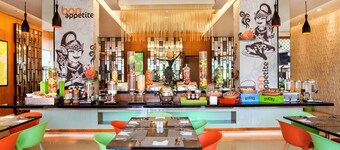
8.2/10 Very Good! (口コミ 167 件)
スタッフの対応は素晴らしい。 設備が古く、問題があります。自分が宿泊した部屋は小さなアリがたくさん住んでいて、トイレの水がずっと流れたままで流水音に煩わされました。
口コミ投稿日 : 2025 年 9 月 2 日

イビス スタイルズ ソロ
Jalan Gajah Mada 23 Surakarta Central Java
3月6日から3月7日までの料金は1泊あたり¥3,322です
¥3,322
合計 ¥4,019
3 月 6 日 ~ 3 月 7 日
税およびサービス料込み
スラカルタにあるスパ付きホテル。WiFi (無料)、駐車場 (無料)、2 つの屋外プールが利用可能です。人気観光スポットのラディア・プスタカ博物館とダナール・ハディが近くにあります。
8/10 Very Good! (口コミ 103 件)
手頃な値段、そこそこ清潔、市街中心部なので出掛けるのに便利。ジムは隣のノボテルと共 用。朝食は格別美味しいわけではないが、まあ空腹は満たせる。
口コミ投稿日 : 2018 年 10 月 26 日

FIM by Zigna
31 Jl. Yosodipuro Surakarta Jawa Tengah
スラカルタにあるスパ付きホテル。WiFi (無料)、駐車場 (無料)、フルサービス スパが利用可能です。人気観光スポットのナカムラ・クリニックとマンクヌガラン宮殿が近くにあります。
9.4/10 Exceptional! (口コミ 6 件)
The hotel is an excellent place to stay. The hotel itself is not special or fancy, but it is well-run, clean, and located in the center of Solo. The breakfast buffet is excellent, the restaurant is good, and the hotel also has a nice cafe with an outside seating area. They featured life music at ...
口コミ投稿日 : 2025 年 7 月 19 日

コンフォート センター レジデンス ソロ
Jalan RM. Said Surakarta Jawa Tengah
3月9日から3月10日までの料金は1泊あたり¥2,462です
¥2,462
合計 ¥2,979
3 月 9 日 ~ 3 月 10 日
税およびサービス料込み
スラカルタのホテル。WiFi (無料)、駐車場 (無料)、24 時間対応フロントデスクが利用可能です。人気観光スポットのナカムラ・クリニックとマンクヌガラン宮殿が近くにあります。

ロジ ホテル ソロ バイ Wステイ
Jl. Hasanudin 134, Surakarta Surakarta Central Java
2月25日から2月26日までの料金は1泊あたり¥1,951です
¥1,951
合計 ¥2,396
2 月 25 日 ~ 2 月 26 日
税およびサービス料込み
スラカルタにあるスパ付きホテル。WiFi (無料)、フルサービス スパ、朝食 (有料)が利用可能です。人気観光スポットのナカムラ・ クリニックとマンクヌガラン宮殿が近くにあります。
7/10 Good! (口コミ 17 件)
The room and bed were big and comfortable, but no fridge and no safebox. Breakfast was really good, though. The hotel is very close to the Balapan train station, which is nice. It’s a decent budget place, but what makes me unable to recommend is because how dangerous the roads are around the hotel. ...
口コミ投稿日 : 2025 年 9 月 12 日
表示料金は、過去 24 時間における 1 泊大人 2 名利用時の最低価格です。料金および空室状況は変動する場合があります。別途、利用規約が適用される場合があります。


![At the museum no photos are allowed which is really unfortunate as it was well worth the visit and the guided tour is definitely not to be missed. In the museum there are even Batik made from the Dutch era which depicts stories like Little Red Riding Hood and Snow White!
I enjoyed the tour v much and at the end of the tour we were brought to this room where the artisan were working on hand drawn batik.
Below is an excerpt from Wikipedia for anyone interested in learning more about the process of batik making.
Firstly, a cloth is washed, soaked and beaten with a large mallet. Patterns are drawn with pencil and later redrawn using hot wax, usually made from a mixture of paraffin or bees wax, sometimes mixed with plant resins, which functions as a dye-resist. The wax can be applied with a variety of tools. A pen-like instrument called a canting (IPA: [tʃantiŋ], sometimes spelled with old Dutch orthography tjanting) is the most common. A canting is made from a small copper reservoir with a spout on a wooden handle. The reservoir holds the resist which flows through the spout, creating dots and lines as it moves. For larger patterns, a stiff brush may be used. Alternatively, a copper block stamp called a cap (IPA: [tʃap]; old spelling tjap) is used to cover large areas more efficiently.
After the cloth is dry, the resist is removed by scraping or boiling the cloth. The areas treated with resist keep their original color; when the resist is removed the contrast between the dyed and undyed areas forms the pattern. This process is repeated as many times as the number of colors desired.
The most traditional type of batik, called batik tulis](https://images.trvl-media.com/place/6224808/26fd1460-c65a-4c1a-9444-7a893e883ac9.jpg?impolicy=fcrop&w=350&h=192&q=medium)